
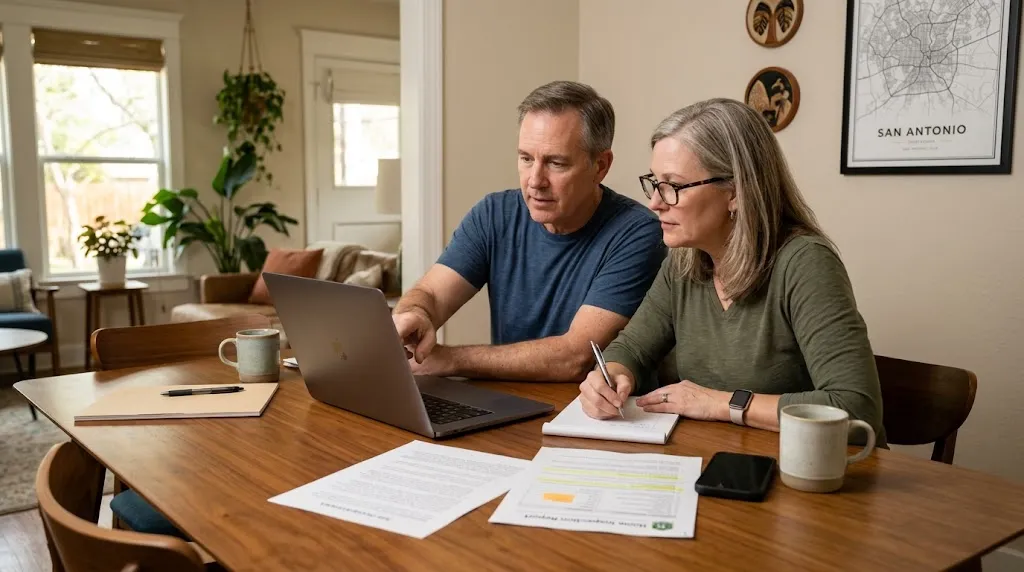
Choosing a foundation repair contractor is different from hiring someone for routine home maintenance.
A foundation repair project can affect the structural support of your home, the floors above it, crawl-space components, drainage, and potentially other connected systems. The right contractor should therefore do more than provide a repair price.
They should be able to explain what is wrong, why it happened, what needs to be repaired, how the repair will be performed, and what happens if the problem returns.
Why Contractor Selection Is Critical for Foundation Work
Foundation problems are not always straightforward.
A floor can slope because of a settled pier, but it could also be affected by a damaged beam, deteriorated joist, inadequate shimming, soil movement, moisture conditions, or another structural issue.
That means the cheapest estimate is not necessarily the best estimate.
For pier and beam homes, that typically means looking beyond the finished floor and inspecting the crawl space, including accessible piers, beams, joists, support points, moisture conditions, and visible signs of deterioration or pest activity.
The goal is not to find the lowest number. It is to find the contractor offering the clearest and most appropriate solution for the actual problem.
7 Things to Check Before Hiring Any Foundation Contractor in San Antonio
1. Verify the Contractor’s Credentials
Start by identifying exactly who will perform the work.
One common misconception is that Texas homeowners can simply look up a statewide “foundation repair contractor license” and verify it in the same way they would verify a professional engineer.
That makes other forms of verification especially important.
Ask the contractor:
- What legal business entity will sign the contract?
- Who will actually perform the work?
- Are subcontractors involved?
- Are any licensed professionals involved?
- If engineering is required, who is the engineer?
If the project involves engineering analysis or a formal structural opinion, verify the credentials of the engineer separately through the appropriate Texas professional licensing resources.
2. Verify Liability Insurance & Workers’ Compensation
Foundation work involves excavation, lifting, structural supports, crawl spaces, heavy equipment, and work around an occupied home.
Ask for current documentation showing the contractor’s applicable insurance coverage.
At minimum, you want to understand whether the company carries appropriate general liability insurance and how workers’ compensation is handled for employees working on your property.
Ask: “Can you provide current certificates of insurance before work begins?”
A reputable contractor should understand why a homeowner is asking.
3. Check BBB Rating & Complaint History
A strong online rating is useful. It is not proof of quality. Look beyond the star rating and examine the company’s history.
When reviewing a contractor’s Better Business Bureau profile, look for patterns involving:
- Unresolved complaints
- Contract disputes
- Warranty complaints
- Communication problems
- Billing disputes
One complaint does not automatically make a contractor unreliable.
What matters more is how the company responds to problems and whether similar complaints appear repeatedly.
4. Verify a Physical San Antonio Address
Be cautious when a contractor has no identifiable business location.
A physical San Antonio-area business address can provide another layer of confidence that you are dealing with an established local operation rather than an anonymous lead-generation website.
Check whether:
- The company lists a verifiable business address
- The address is consistent across major business listings
- The company has been operating under the same or related name
- You can identify the actual contracting entity on the proposal
A P.O. box alone does not tell you much about where the business actually operates.
5. Demand a Written Scope of Work & Clear Payment Terms
Never rely on a verbal description of foundation repairs. Your contract should explain exactly what the contractor intends to do.
For pier and beam repair, the written scope should be specific enough to answer questions such as:
- Which areas of the home will be repaired?
- Which piers or supports are involved?
- Will beams or joists be replaced?
- Will shimming or re-leveling be performed?
- Are damaged structural members included?
Be particularly careful with contracts that use vague phrases such as “foundation repair as needed” without defining what that means.
You should know:
Total contract price + deposit + progress payments + final payment + additional-work approval process.
6. Understand the Warranty – Not Just the Warranty Length
“Lifetime warranty” sounds impressive.
It is also incomplete. Before accepting a warranty, ask what it actually covers.
For example:
- Does it cover workmanship?
- Does it cover materials?
- Does it cover the repaired support?
- Does it cover future movement?
- Is the warranty transferable to a future homeowner?
A five-year warranty with broad coverage may be more meaningful than a “lifetime” warranty containing extensive exclusions.
Read the warranty document itself. Do not rely on the salesperson’s summary.
7. Ask Who Handles Permits
Foundation work can involve structural modifications, excavation, repairs to structural components, or other work for which local permitting requirements may apply.
Ask your contractor: “Does this project require a permit, and if so, who will pull it?”
Likewise, do not assume that every foundation repair project requires the same permit.
A good contractor should be able to explain the permitting approach for your specific project rather than giving you a generic answer.
Red Flags to Walk Away From
A foundation contractor does not have to be perfect to be legitimate.
But certain behaviors should make you slow down or seek another opinion.
1. “You have to sign today.”
Foundation problems are rarely improved by artificial deadlines.
Be cautious when a salesperson creates urgency around a quote that is supposedly available only if you sign immediately.
2. The contractor cannot explain the cause
If the recommendation is simply “you need 20 piers” without explaining why, ask more questions.
A repair quantity should have a reason behind it.
3. No written scope
If you cannot determine exactly what you are paying for, you cannot meaningfully compare the proposal.
4. They discourage independent evaluation
A reputable contractor should not be threatened by reasonable questions or a second opinion.
If engineering is appropriate, an independent structural engineer may be exactly what the situation requires.
5. The salesperson diagnoses everything in minutes
A pier and beam foundation is a system.
A meaningful assessment may require crawl-space access and examination of the structural components below the floor.
Questions to Ask During the Estimate
Before signing a foundation repair contract in San Antonio, ask these questions directly.
About the Problem
- What exactly is causing the movement?
- Which structural components are affected?
- Is the problem localized or widespread?
- How did you determine that?
About the Repair
- What repair method are you recommending?
- Why is that method appropriate for this house?
- How many supports or structural components are being repaired?
- Will the repair change the floor elevations?
About the Contract
- What exactly is included in the price?
- What is not included?
- Who obtains permits?
- What happens if additional work is needed?
About the Warranty
- What does the warranty cover?
- How long does it last?
- Is it transferable?
- What exclusions apply?
About the Company
- Who will actually perform the work?
- Are subcontractors involved?
- Can you provide references for similar pier and beam projects?
If a contractor is unwilling or unable to answer straightforward questions, that is useful information in itself.
What Separates a General Contractor from a Foundation-Only Specialist?
There is no rule that says a homeowner must hire a foundation-only company.
A qualified general contractor can perform foundation work when they have the appropriate experience, personnel, subcontractors, and project capability.
The important question is not the label.
It is whether the contractor understands the complete problem.
For example, a homeowner may discover that:
Settlement → damaged support → deteriorated beam → uneven floor → damaged interior finishes
At VAN General Contracting, pier and beam assessments focus on the foundation system as well as the surrounding structural conditions that can contribute to the symptoms homeowners see inside the house.
How to Compare Two Foundation Repair Estimates
Do not compare estimates based on price alone. Create a simple side-by-side comparison.
| What to Compare | Contractor A | Contractor B |
| Written scope | ✓ / — | ✓ / — |
| Cause identified | ✓ / — | ✓ / — |
| Total price |
This often reveals why two apparently similar estimates are priced differently.
A cheaper proposal is not necessarily cheaper if it leaves major components outside the scope.
When Should You Get a Second Opinion?
A second opinion is reasonable when:
- Two contractors recommend dramatically different repairs
- The proposed repair is unusually extensive
- You do not understand why the repair is necessary
- The contractor cannot document the problem
- The proposal is significantly higher than comparable estimates
A second opinion is particularly valuable when the recommended repair represents a substantial financial investment. The purpose is not to find someone who tells you what you want to hear.
Choosing a Pier & Beam Foundation Contractor in San Antonio
The best foundation contractor is not necessarily the company with the biggest advertisement, the lowest estimate, or the longest warranty headline.
Look for a contractor who can demonstrate:
- Clear diagnosis.
- Specific scope of work.
- Appropriate credentials and insurance.
- Transparent pricing.
- Documented warranty coverage.
Foundation repair is a significant decision for any homeowner. Take the time to understand the problem before choosing the solution.
Before You Sign a Foundation Repair Contract
Your home may only get one foundation repair project.
Choose the contractor based on evidence, transparency, experience, and the quality of the proposed solution — not pressure.
If you are seeing sagging floors, uneven rooms, sticking doors, crawl-space deterioration, or other signs of pier and beam foundation movement, VAN General Contracting can evaluate the property and explain what is actually happening.
Call (830) 549-4331 to schedule a free foundation inspection in San Antonio.
[Schedule a Free Foundation Inspection]
Frequently Asked Questions
Question No. 01 How do I find a reliable pier and beam foundation contractor in San Antonio?
Start by comparing several qualified contractors and verifying their business identity, insurance, relevant experience, written scope of work, warranty terms, references, and permitting approach.
Question No. 02 How many foundation repair estimates should I get?
For a significant foundation repair project, getting two or three detailed estimates can provide useful comparison points. Make sure each contractor is evaluating the same underlying problem and providing a comparable written scope.
Question No. 03 Should a foundation contractor provide a written estimate?
Yes. A significant foundation repair project should have a written proposal identifying the scope of work, price, payment terms, exclusions, warranty, and other material terms.
Question No. 04 What should a foundation repair warranty cover?
A warranty may cover workmanship, materials, specific repaired components, or future movement, depending on the contractor. Review the actual warranty document and its exclusions rather than relying on phrases such as “lifetime warranty.”
Question No. 05 Should I get a second opinion before foundation repair?
For a significant repair, a second opinion can be worthwhile — particularly when contractors recommend substantially different solutions or when you do not understand the proposed repair.