
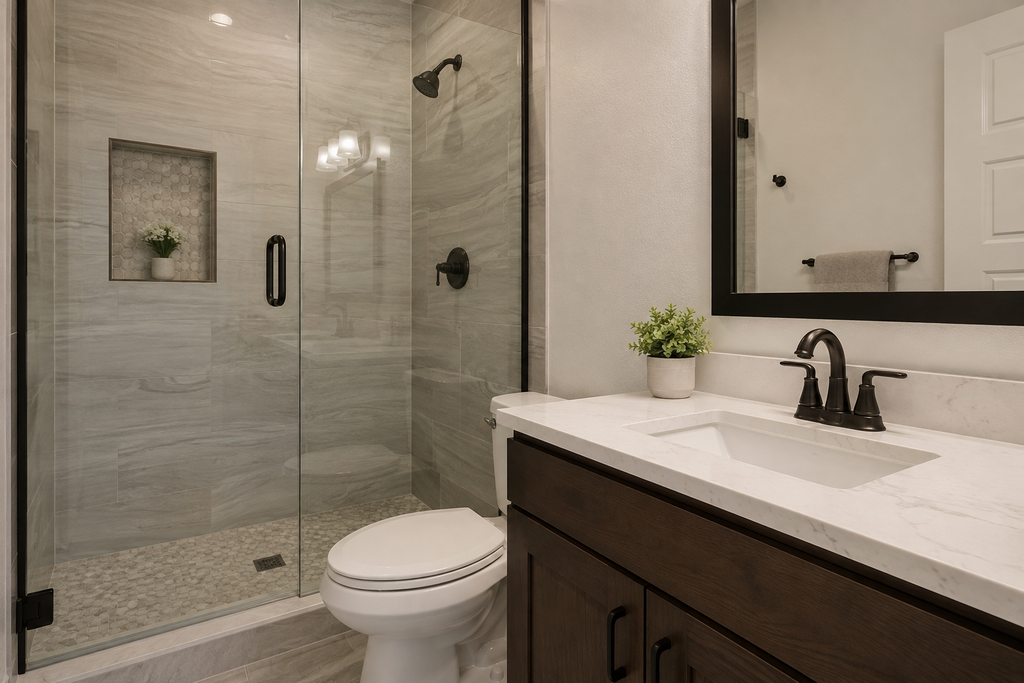
Choosing a bathroom tile is about more than just finding a color you like.
The right tile needs to match:
- The location where it will be installed
- The amount of water and moisture it will encounter
- How much maintenance you are willing to perform
- How the material will work with the rest of your bathroom design.
For San Antonio homeowners, heat, humidity, water exposure, cleaning habits, and the age and condition of the home can all influence a successful bathroom renovation.
A tile that works beautifully on a bathroom wall may be a poor choice for a shower floor. A polished stone that looks luxurious may become difficult to maintain in a high-moisture environment.
Why Tile Choice Is Different in San Antonio
San Antonio bathrooms have to perform in a climate characterized by hot summers, periods of high humidity, and significant seasonal changes. That does not mean homeowners need a special “San Antonio tile.”
It means the installation should account for moisture, ventilation, cleaning, and the specific conditions of the bathroom.
Humidity, Heat & Clay Soil Considerations
Humidity matters most in bathrooms with inadequate ventilation or frequent moisture exposure.
A properly installed porcelain or ceramic tile can perform extremely well in these conditions, but the tile itself is only one part of the system.
The underlying waterproofing, substrate, grout, sealants, ventilation, and installation quality all matter. San Antonio’s clay soils are a separate consideration.
It does mean that homeowners should pay attention to existing structural movement before installing expensive rigid finishes.
If a bathroom floor has unexplained cracking, significant movement, or signs of foundation settlement, investigate the underlying condition before completing a major tile installation.
Tile Types Explained
There is no universally “best” bathroom tile. The right choice depends on the location, exposure, appearance, budget, and maintenance requirements.
Porcelain – The Workhorse of San Antonio Bathrooms
Porcelain is one of the most versatile choices for residential bathrooms.
It is a type of ceramic tile made from refined clay and fired at high temperatures. Porcelain is generally denser and has lower water absorption than standard ceramic tile.
That makes it particularly useful for:
- Bathroom floors
- Shower walls
- Shower floors when an appropriate slip-resistant surface is selected
- Tub surrounds
- High-traffic bathrooms
Porcelain is also available in an enormous range of colors and finishes. You can find porcelain designed to resemble:
- Natural stone
- Marble
- Concrete
- Wood
- Limestone
For homeowners who want the appearance of natural materials without the same maintenance requirements, porcelain is often a practical option.
Ceramic – Best Value for Many Wall Applications
Ceramic tile is another widely used bathroom material.
It can be an excellent choice for:
- Bathroom walls
- Backsplashes
- Tub surrounds
- Low-impact floor applications when the specific product is rated for flooring
Ceramic is generally available at a wide range of price points and styles.
For homeowners working within a defined remodeling budget, ceramic can allow you to spend more on other high-priority areas such as cabinetry, fixtures, plumbing, lighting, or waterproofing.
The key is to check the manufacturer’s specifications for the intended application.
Natural Stone: Travertine, Slate & Marble
Natural stone can give a bathroom a distinctive, high-end appearance.
Common options include:
Travertine
Travertine provides a warm, traditional appearance and can work well in classic or Mediterranean-inspired bathrooms.
Slate
Since slate is a natural material with variations in texture and porosity, homeowners should understand the manufacturer’s maintenance and sealing recommendations.
Marble
Marble is one of the most recognizable luxury bathroom materials. If you choose natural stone, understand the maintenance requirements before installation rather than after.
Glass Tile – Accents & Niches
Glass tile is most commonly used as a decorative element rather than covering an entire bathroom.
It works particularly well for:
- Shower niches
- Accent strips
- Backsplashes
- Feature walls
- Decorative borders
Since glass can reflect light, it can also help create visual depth in smaller bathrooms. The challenge is that glass tile installation can require careful layout and setting techniques.
Floor Tile vs Shower Tile vs Wall Tile – What’s Different?
One of the biggest mistakes homeowners make is choosing tile based only on appearance.
Bathroom Floor Tile
Bathroom floors need to balance:
- Slip resistance
- Durability
- Water exposure
- Ease of cleaning
- Comfort underfoot
Small-format tile can also be useful in areas where the installer needs to create multiple slopes toward a drain because the increased number of grout joints allows the surface to follow the required contours more easily.
Shower Floor Tile
The shower floor has more demanding requirements than a typical bathroom floor. It must work with the slope toward the drain and provide an appropriate surface for wet, bare feet.
But the important consideration is not simply “small tile versus large tile.” The specific product’s intended application and slip characteristics matter.
Shower Wall Tile
Shower walls are less demanding from a slip-resistance perspective because people do not walk on them.
Natural stone can create a luxurious look. Glass tile can create accents. The waterproofing system behind the tile is critical, however.
Tile and grout are not the waterproofing system by themselves.
Bathroom Wall Tile
Bathroom walls generally give homeowners the greatest flexibility.
You can use:
- Large-format porcelain
- Ceramic subway tile
- Natural stone
- Decorative mosaics
- Glass tile
- Patterned tile
Since walls are not exposed to the same mechanical demands as floors, the design options are much broader.
Size & Format Trends in San Antonio Renovations
Tile trends come and go, but certain formats remain popular because they create specific visual effects.
Large Format: 24×24 and 12×24
Large-format tiles can make a bathroom feel more continuous and contemporary.
Popular formats include:
12 × 24 inches
and
24 × 24 inches
Larger tiles create fewer grout joints, which can produce a cleaner appearance.
They can also make a smaller bathroom appear less visually fragmented. However, large-format installation requires a suitable substrate and careful installation.
The larger the tile, the more important flatness becomes. Large tiles are not automatically easier to install simply because there are fewer pieces.
Hex Mosaic & Pattern Tile
Small-format tiles can introduce texture and personality.
Hexagonal mosaics are particularly useful for:
- Shower floors
- Bathroom floor accents
- Niches
- Feature areas
Patterned tile can also create a focal point without requiring an entire bathroom to use a bold design.
The key is balance. If the floor is highly patterned, keeping the walls and fixtures simpler can prevent the space from becoming visually overwhelming.
How to Choose Tile Color for a San Antonio Bathroom
Color should be considered alongside natural light, bathroom size, cabinetry, countertops, and fixtures.
Light Tile
Light colors can make smaller bathrooms feel brighter and more open. They also make natural and artificial light more noticeable. However, very light grout can show dirt more quickly in high-use areas.
Dark Tile
Dark tile can create a dramatic, sophisticated bathroom.
It can work particularly well in:
- Large bathrooms
- Feature walls
- Shower surrounds
- Powder rooms
But dark surfaces can show mineral deposits, soap residue, and water spots more readily depending on the finish.
Neutral Tile
Neutral tones are usually the safest long-term option for homeowners who want flexibility.
Warm whites, beige, taupe, gray, stone tones, and soft earth colors can work with changing décor and fixtures.
Grout Selection & Maintenance in San Antonio
Grout is easy to overlook but it should not be. Grout affects both the appearance and maintenance requirements of a tiled bathroom.
Choose Grout Color Carefully
A contrasting grout color can emphasize the individual shape of each tile.
For example:
White tile + dark grout = stronger geometric pattern
White tile + white grout = softer, more continuous appearance
Cementitious vs Epoxy Grout
Traditional cement-based grout is widely used and can perform well when properly installed and maintained. The best choice depends on the application, product specifications, budget, and installer.
Maintenance Matters
Even high-quality tile can look poor if grout and surrounding surfaces are neglected.
Good bathroom maintenance includes:
- Controlling humidity
- Using bathroom ventilation
- Cleaning according to manufacturer recommendations
- Addressing leaks quickly
Natural stone generally requires more maintenance than porcelain or ceramic, particularly when sealing is recommended by the manufacturer.
Waterproofing Matters More Than the Tile
One of the most important things to understand before a bathroom renovation is this:
The tile is the finished surface – not the waterproofing system.
Depending on the construction method, this can involve waterproof membranes, appropriate backer systems, properly treated joints, and correctly detailed transitions and penetrations.
Signs of a potential shower waterproofing problem include:
- Persistent moisture outside the shower
- Soft or swollen materials
- Staining
- Musty odors
- Loose or damaged tiles
- Recurring mold
- Water appearing in adjacent rooms
If these symptoms are already present, investigate the underlying moisture problem before simply replacing the visible tile.
Tile Selection Mistakes San Antonio Homeowners Make
Choosing Based Only on Appearance
A tile can look perfect in a showroom and still be the wrong product for a shower floor.
Always ask:
Where is this tile rated to be installed?
Assuming All Porcelain Is the Same
Porcelain varies in texture, finish, thickness, size, and intended application. Choose the actual product based on where it will be installed.
Choosing Grout as an Afterthought
Grout can dramatically change how a tile installation looks. Make the grout decision at the design stage, not after the tile has already been ordered.
Ignoring Maintenance
A natural stone bathroom may look beautiful but require substantially more maintenance than a porcelain installation. Know what you are committing to.
Selecting Tile Without Considering Drainage
Do not choose a large format simply because you prefer its appearance without discussing whether it is appropriate for the specific shower floor.
How Much Should You Spend on Bathroom Tiles?
Tile is only one part of the bathroom remodeling budget.
Your total project can also include:
- Demolition
- Surface preparation
- Waterproofing
- Tile installation
- Grout
- Backer materials
- Plumbing
Appropriate material + proper substrate + professional installation + good waterproofing + design that fits the home.
A Simple Bathroom Tile Selection Checklist
Before ordering tile, confirm:
- Where will the tile be installed?
- Is the product rated for that application?
- Is the floor surface appropriate for wet, bare feet?
- Does the shower tile work with the required slope?
- Is the tile suitable for the existing substrate?
When Should You Hire a Professional for Bathroom Tile Installation?
DIY tile installation can be appropriate for some simple projects.
Professional installation becomes particularly valuable when the project involves:
- Shower waterproofing
- Shower floor drainage
- Large-format tile
- Complex patterns
- Natural stone
- Uneven substrates
- Structural repairs
A professional remodeling contractor can coordinate these elements so that the finished bathroom works as a complete system rather than a collection of separate upgrades.
Choosing Bathroom Tile That Lasts
It is the tile that is appropriate for the surface, compatible with the bathroom’s conditions, practical to maintain, and installed as part of a properly constructed system.
For most San Antonio homeowners, that means starting with function:
Where will the tile go?
How much water will it encounter?
How much maintenance are you comfortable with?
Does the existing surface need preparation or repair?
What style will still look good several years from now?
If you are planning a bathroom renovation in San Antonio and need help determining the right scope, VAN General Contracting can help coordinate the project from planning and preparation through installation.
Ready to plan your bathroom remodel?
Talk to VAN General Contracting
Frequently Asked Questions
Question No: 01 Is porcelain tile good for shower walls?
Yes. Porcelain is commonly used for shower walls and is available in large formats, stone-look finishes, marble-look designs, and many other styles.
Question No: 02 Is marble a good choice for a bathroom?
Depending on the stone, it may be susceptible to staining, scratching, or etching and may require sealing and appropriate cleaning products.
Question No: 03 Are large-format tiles good for small San Antonio bathrooms?
They can be. Large-format tiles can reduce visual grout lines and create a more continuous appearance, which can make a small bathroom feel more spacious.
Question No: 04 What grout is best for bathroom tile?
The appropriate grout depends on the application and tile. Cementitious grout is common and versatile, while epoxy grout provides greater resistance to staining and moisture penetration but costs more and requires specialized installation.
Question No: 05 Does bathroom tile need to be waterproof?
In a shower, the construction behind the tile must provide appropriate water management and waterproofing.